
How Much Do Biokineticists Earn?
Biokineticists play a specialised role in healthcare, using scientifically prescribed exercise to help people recover from injury, manage chronic conditions, and improve physical function. Positioned at the intersection of rehabilitation and preventative care, the profession continues to grow in relevance as more people seek non-invasive, movement-based approaches to long-term health.
In South Africa, biokineticist salaries can vary considerably. On average, practitioners earn somewhere between R20,000 and R48,500 per month, though this range is not fixed. Interns completing their compulsory clinical training may earn closer to R10,000 per month, while experienced professionals working in high-demand private practices can earn R80,000 or more.
This variation exists because a biokineticist’s income is influenced by several factors. Experience level plays a major role, as practitioners build clinical expertise and a larger patient base over time. Location also matters, with major cities generally offering higher earning potential due to demand and cost of living. Finally, employment model makes a significant difference. Those working in private practice or operating their own practices often have higher earning potential compared to salaried positions in military bases, gyms, or corporate wellness environments.
Understanding these variables is key to forming a realistic picture of what biokineticists actually earn and how income can evolve throughout a career.
Average Biokineticist Salary in South Africa
Across the profession, the average biokineticist salary in South Africa generally falls between R20,000 and R35,000 per month, translating to roughly R240,000 to R420,000 per year. While these numbers represent typical earnings across the industry, they should be viewed as broad benchmarks rather than fixed salaries.
The wide range exists because biokinetics offers multiple career pathways. Some practitioners work in structured environments such as military bases, rehabilitation centres, or corporate wellness programmes, where salaries are stable but often more modest. Others operate within private practices, where income is tied more directly to the number of patients treated and the session fees charged.
Demand for movement-based rehabilitation and preventative healthcare has also been increasing. With growing rates of chronic diseases, sports injuries, and sedentary lifestyle conditions, healthcare systems are placing greater emphasis on exercise therapy as part of long-term patient care. This trend has gradually increased both the visibility and the earning potential of the profession.
For many practitioners, income tends to grow steadily over time as experience develops, professional networks expand, and patient referrals increase.
Biokineticist Salary by Experience Level
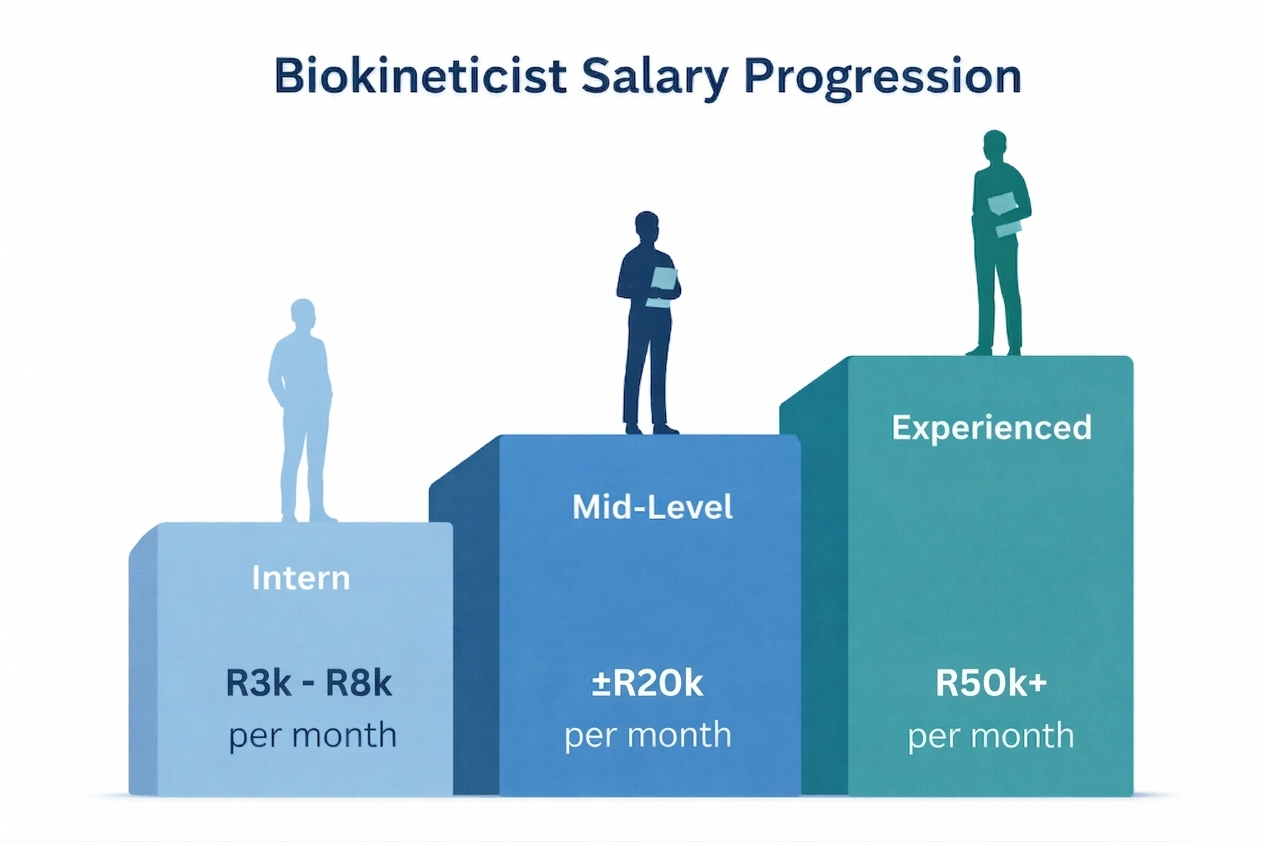
Like most healthcare professions, income in biokinetics tends to grow with experience. As practitioners develop clinical confidence, build referral networks, and establish a consistent patient base, their earning potential expands significantly.
Intern / Entry-Level Biokineticists
For many graduates, the first step into the profession is the HPCSA-required internship year. During this period, newly qualified biokineticists work under supervision in accredited practices while gaining practical clinical experience.
Monthly earnings at this stage typically range between R3000 and R7000. The focus during this phase is less about income and more about professional development. Interns learn how to assess patients, design rehabilitation programmes, work within multidisciplinary healthcare teams, and manage the practical realities of clinical practice.
Although earnings may be modest during this stage, the internship year provides the foundation for long-term career growth.
Mid-Level Biokineticists
Once practitioners complete their internship and gain independent clinical experience, earning potential begins to increase. Biokineticists at this stage often earn around R20,000 per month on average, though this can vary depending on the practice environment and patient demand.
Income growth during this phase is often linked to:
• A growing patient base
• Increased confidence in clinical decision-making
• Stronger referral relationships with doctors, physiotherapists, and other healthcare professionals
• Greater efficiency in programme design and patient management
Many practitioners also begin developing areas of interest or niche expertise during this period.
Experienced Biokineticists
At the upper end of the profession, highly experienced biokineticists can earn north of R50,000 per month. These practitioners often have years of clinical experience, strong professional networks, and a well-established patient base.
In private practice environments especially, experience and reputation tend to have a positive influence on income.
Biokineticist Salaries by City in South Africa
Location is another factor that can influence how much a biokineticist earns. Differences in population density, healthcare infrastructure, demand for rehabilitation services, and cost of living all contribute to variations in income across regions.
Urban centres generally offer higher earning potential, largely due to greater demand for specialised healthcare services and larger patient populations. Smaller cities or rural areas may have fewer opportunities, although they can sometimes present less competition.
Below is a general comparison of average annual salaries for biokineticists across several South African cities.
| City / Region | Average Annual Salary (ZAR) |
|---|---|
| Cape Town | 237,000 |
| Johannesburg | 246,000 |
| Durban | 220,000 |
| Pretoria / Gauteng | 250,000 – 350,000 |
| Port Elizabeth | 183,000 |
The differences between cities are influenced by several factors. Cost of living in larger metropolitan areas such as Johannesburg, Pretoria, and Cape Town tends to be higher, which is often reflected in salary levels. At the same time, these cities typically have more private practices, sports facilities, and corporate wellness programmes, creating more opportunities for practitioners.
Smaller cities may offer lower average salaries, but they can still provide stable opportunities, particularly in established practices with strong referral networks.
How Employment Type Affects a Biokineticist’s Salary
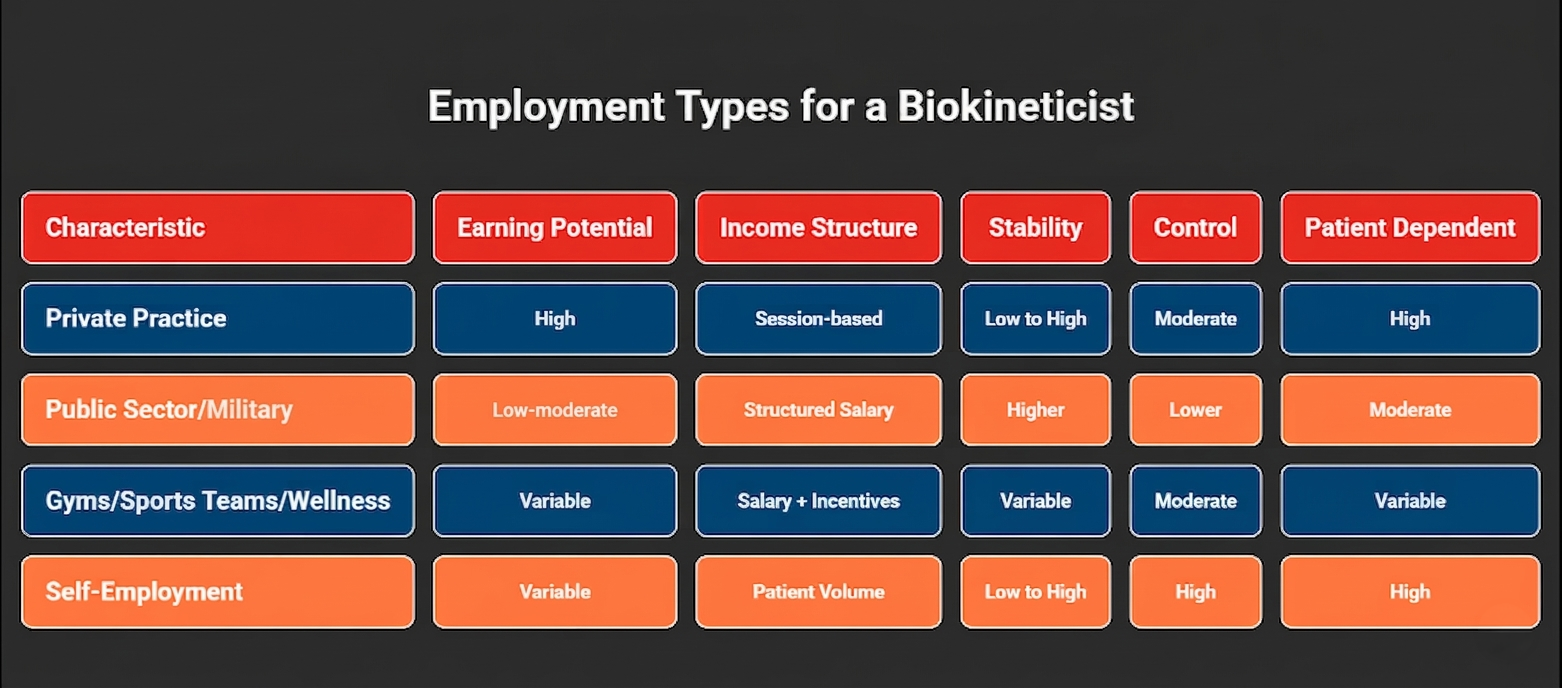
Beyond experience and location, the type of employment a biokineticist chooses can significantly influence income. Different work environments offer varying salary structures, levels of stability, and earning potential.
Private Practice
Private practices are often where biokineticists have the highest earning potential. Many practitioners are paid on a session-based model, earning a percentage of the fee charged for each consultation or rehabilitation session.
With sessions commonly priced around R400, practitioners who build a consistent patient base can generate strong monthly earnings. In these environments, income is closely tied to patient volume, retention, and referrals, meaning experienced clinicians with strong professional networks often earn considerably more.
Public Sector and Military Bases
Biokineticists working in public healthcare settings or military bases typically receive a structured salary. These roles tend to provide greater stability and predictable income, but salaries are generally low to moderate compared to the upper end of private practice environments.
Public sector roles may also come with benefits such as formal employment structures and multidisciplinary collaboration, although earning potential is usually capped compared to private practice models.
Gyms, Sports Teams, and Wellness Facilities
Some biokineticists work in fitness centres, sports performance facilities, or corporate wellness programmes. In these settings, salaries may be combined with performance incentives or bonuses, particularly when working with athletes, sports teams, or corporate clients.
These roles can provide unique opportunities to work with specific populations, though overall income often depends on the structure of the organisation and the services offered.
Self-Employment
Self-employed biokineticists operate their own practices or independent clinics, giving them full control over pricing, patient scheduling, and service offerings.
Income in this model can vary widely. Practitioners with strong reputations and steady patient flow can earn significantly more than salaried counterparts. However, earnings are directly linked to patient volume, operational costs, and business management, making income less predictable in the early stages of practice.
Additional Factors That Influence Biokineticist Income
While experience, location, and employment type play major roles, several other factors can influence how much a biokineticist ultimately earns.
Professional registration and industry membership can contribute to credibility and professional opportunities. Many practitioners join organisations such as the Biokinetics Association of South Africa (BASA), which supports professional development and industry recognition.
Naturally, years of clinical experience continue to play a central role in salary growth. As practitioners refine their clinical skills and develop a deeper understanding of patient care, their ability to manage more complex cases often increases.
Finally, income is strongly influenced by reputation and referral networks. Relationships with doctors, physiotherapists, and other healthcare providers can drive a steady stream of patient referrals, while positive patient outcomes and word-of-mouth recommendations often contribute to long-term practice growth.
Is Biokinetics a Well-Paid Career in South Africa?

Biokinetics sits in an interesting position within the broader health and fitness industry. Unlike general fitness careers such as personal training, biokineticists operate within a clinically recognised healthcare profession, working with patients who often have injuries, chronic conditions, or rehabilitation needs. This medical alignment tends to place their earning potential above many roles in the general fitness sector.
Compared to personal trainers or fitness instructors, biokineticists often benefit from higher session fees, medical aid recognition, and referral networks with healthcare professionals. These factors create more structured and sustainable income opportunities over time. However, income can still vary widely depending on the practitioner’s environment, experience, and ability to build a consistent patient base.
Like many healthcare careers, the profession also offers a balance between financial growth and professional development. As practitioners gain experience, refine their clinical skills, and establish strong referral relationships, their earning potential tends to increase steadily.
Looking ahead, the long-term outlook for biokinetics in South Africa appears positive. Rising rates of chronic disease, lifestyle-related health conditions, and sports injuries continue to increase demand for exercise-based rehabilitation and preventative care. As healthcare systems place greater emphasis on long-term movement therapy and functional recovery, the role of the biokineticist is likely to become even more relevant.
What Future Biokineticists Should Expect
For those considering a career in biokinetics, salary progression generally follows a clear path. Interns typically begin with modest earnings, gaining practical clinical experience during their supervised training year. As practitioners transition into independent practice and build their patient base, income tends to rise into the mid-level professional range, with experienced clinicians capable of earning significantly more.
Several factors play a central role in salary growth. Experience, location, employment type, and professional reputation all influence how much a biokineticist ultimately earns. Those working in high-demand urban areas or building strong referral networks within private practice settings often see the greatest financial growth.
Beyond salary alone, the profession offers opportunities to work directly with patients, contribute to long-term health outcomes, and specialise in areas such as sports rehabilitation or chronic disease management. For practitioners who combine strong clinical skills with professional networking and business awareness, biokinetics can offer both a meaningful and financially sustainable career within South Africa’s healthcare landscape.


